
Under the trends of “dual carbon” (carbon dioxide, carbon dioxide, and carbon emissions) and the circular economy, recycled polyester fabric has become a new hot spot in the textile industry due to its “turning waste into treasure” characteristic. It is made from waste PET plastic bottles and waste textiles through processes such as crushing and melt spinning. While retaining some of the advantages of virgin polyester, it also has significant shortcomings due to the characteristics of its raw materials and processes. The following is an analysis of its core advantages and disadvantages.
1. Resource Recycling: From “Plastic Mountains” to “Textile Fibers”
Traditional textiles rely on petroleum-based raw materials. Producing one ton of virgin polyester requires seven barrels of crude oil, resulting in carbon emissions of up to 5.5 tons. Recycled fabrics, on the other hand, draw their raw materials from “urban mines” such as discarded PET bottles and old clothing. Of the 50 billion PET bottles recycled annually in China, 80% are processed into recycled fibers, equivalent to reducing crude oil consumption by 3 million tons. For example, Adidas’ “Parley for the Oceans” series uses 11 ocean plastic bottles per garment, both disposing of marine debris and reducing its carbon footprint by 79%. This closed-loop model of “resources—products—waste—recycled resources” is the core value of recycled fabrics.
2.Performance Balance: Breaking the Market Barrier Between Durability and Cost-Effectiveness
Recycled fabrics are not a “compromise for environmental protection.” Its physical properties are highly similar to virgin fabrics: recycled polyester has a tensile strength of 4.5 cN/dtex, on par with virgin polyester, and superior wrinkle resistance and abrasion resistance, making it suitable for high-intensity applications such as outdoor gear and automotive interiors. In terms of cost, recycled fiber raw materials are 15% to 20% cheaper than virgin fibers, driving large-scale adoption by fast-fashion brands like Zara and Uniqlo. For example, Uniqlo’s “recycled down” series reduces costs by 30% by recycling old down jacket fillings, while increasing warmth by 10%, achieving a win-win situation for both environmental protection and business.
3. Functional Expansion: Upgrading from Basic Fabrics to Smart Fibers
Recycled fabrics are breaking through the label of “single environmental protection.” Through technological modification, recycled polyester can achieve functions such as antibacterial, UV protection, and quick-drying moisture absorption: recycled fibers with added nano-silver ions can inhibit 99% of bacterial growth; recycled insulating fibers with a “hollow structure” are 1.5 times warmer than wool. In the medical field, biodegradable surgical sutures made from recycled polylactic acid (PLA) fibers eliminate the need for suture removal after surgery, naturally degrading into carbon dioxide and water, thus avoiding secondary harm. These innovations have transformed recycled fabrics from “substitutes” to “leaders.”
II. The Gap Between Ideal and Reality: Three Major Pain Points of Recycled Fabrics
1. Recycling Dilemma: A Vicious Cycle of Sorting, Washing, and Secondary Pollution
The “green” nature of recycled fabrics is not absolute. Sorting waste textiles is the first hurdle: separating cotton, polyester, and spandex from blended fabrics consumes a large amount of energy, and currently, the global automation rate for sorting is less than 30%. The washing process is even more problematic—each ton of recycled fiber requires 50 tons of water, and the alkaline detergents used may lead to eutrophication of water bodies. Even more serious is the issue of “downgraded recycling”: with each recycling cycle, the strength of recycled fibers decreases by 10%, ultimately only suitable for low-end products such as fillings, making “infinite recycling” difficult.
2. User Experience Shortcomings: A Dual Test of Comfort and Health Risks
The fundamental weakness of recycled fabrics lies in the lack of natural fibers. Taking recycled polyester as an example, its moisture regain rate is only 0.4%, far lower than cotton’s 8.5%, resulting in a stuffy and unbreathable feel when worn, easily triggering skin allergies. Furthermore, dyes and heavy metals may remain in waste materials, and recycled fabrics that haven’t undergone rigorous testing may release harmful substances. A 2025 EU inspection showed that 15% of “recycled fabric” products had excessive formaldehyde levels, raising consumer doubts about their “healthiness.”
3. Market Chaos: A Trust Crisis Due to Pseudo-Environmental Protection and Lack of Standards
The “recycled” label is being abused. Some brands, to reduce costs, mix 10% recycled fibers with 90% virgin fibers, yet claim “100% recycled fabric”; even worse, some use “industrial waste” to masquerade as recycled materials, significantly diminishing environmental benefits. Although GRS (Global Recycling Standard) requires a recycling rate of at least 20%, only 12% of recycled fabrics globally are certified. This “greenwashing” phenomenon not only damages consumer trust but also hinders the healthy development of the industry.
III. Breakthrough Strategies: The Tripartite Force of Technology, Policy, and Consumption
1. Technological Innovation: The Leap from “Physical Recycling” to “Chemical Regeneration”
Chemical recycling technology is rewriting the future of recycled fabrics. Processes such as enzymatic depolymerization and supercritical CO₂ dyeing can break down polyester into pure monomers, producing recycled fibers with quality comparable to virgin fibers, achieving “same-level recycling.” For example, Toray Industries’ “ECO CIRCLE” system uses chemical depolymerization to regenerate 100% of waste polyester into high-end fabrics with almost no loss of strength. Furthermore, waterless dyeing technology can save 100% of water and reduce chemical emissions by 90%, solving pollution problems at the source.
2. Policy Support: Building a Full-Chain Regulatory System
China’s “14th Five-Year Plan for Circular Economy Development” clearly states that by 2025, the recycling rate of waste textiles will reach 25%, and the output of recycled fibers will reach 2 million tons. Driven by policy, the “Extended Producer Responsibility” system is gradually being implemented—brands are required to undertake the obligation of recycling old clothes. For example, H&M has established 1,000 recycling points in China, recycling 12,000 tons per year. Simultaneously, the application of blockchain technology enables full traceability of recycled fabrics “from raw materials to finished products.” Consumers can scan a code to view information such as the source of raw materials and carbon footprint, eliminating “pseudo-environmentalism.”
3. Consumer Awakening: From “Price Sensitivity” to “Value Recognition”
Consumer choices are the ultimate driving force for industrial upgrading. Surveys show that 72% of Generation Z are willing to pay a 15% premium for recycled fabric products, prompting brands to increase R&D investment. For example, Patagonia’s “Worn Wear” program extends product lifecycles by repairing and recycling old clothes, resulting in a 20% increase in annual sales. When “environmental protection” transforms from a marketing gimmick into a lifestyle, recycled fabrics can truly integrate into the mainstream market.
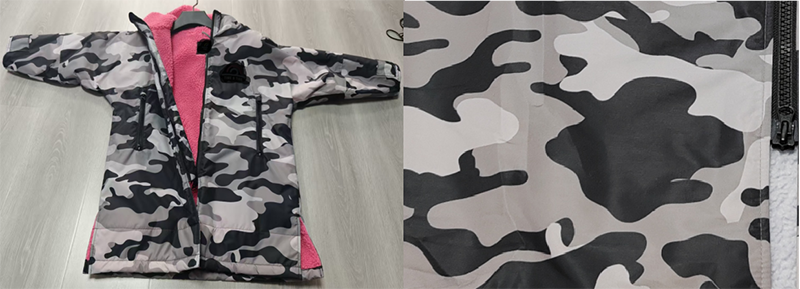
With increasing public awareness of environmental protection, renewable fabrics are gaining popularity. Examples include waterproof ponchos made from renewable polyester and nylon fabrics, as well as waterproof changing robe made from renewable materials. Both the outer waterproof layer and the inner fleece layer can be made from renewable materials. Besides there is also microfiber towels which made of recycled material , like beach towels , sport towels, and the package can also be made of recycled material . so from product to package , the whole process will be good for environment.
We are the specialized factory which have rich experience in the recycled waterproof changing robe and towels making, welcome consult if you show any interest in
Post time: Jan-08-2026