
As global buyers shift their focus from low-cost disposable textiles toward long-lasting, brand-forward home goods, everyday essentials including towels and bathrobes have entered a new era of competition. Modern shoppers and commercial clients are no longer satisfied with basic absorbency alone. They seek textiles that combine soft handfeel, dependable performance, clean aesthetics, and custom branding potential. In this market landscape, jacquard weaving has stood out as one of the most reliable ways for textile businesses to upgrade product lines and differentiate themselves from mass-produced alternatives. This enduring weaving technique delivers subtle texture, stable branding, and lasting quality, which is why it continues to gain popularity among hotel purchasers, gift brand operators, retail merchants, and overseas importers. For any China towel factory aiming to build sustainable partnerships with international clients, mastering jacquard production has become a core competitive strength.
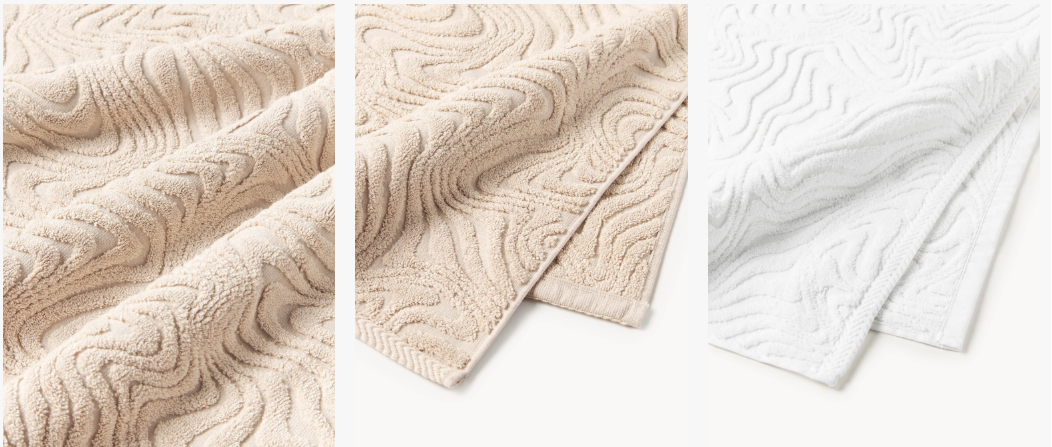
1. What Is Jacquard Weaving?
Jacquard is a textile-weaving technique with a long and storied history. In the late 18th century, French inventor Joseph Marie Jacquard developed the jacquard loom, which used a system of punched cards to control the interlacing of every warp and weft thread, weaving intricate patterns directly into the fabric. This invention profoundly reshaped the global textile industry. Today, with the widespread adoption of electronic jacquard looms, the precision and efficiency of the process have improved dramatically, making it widely applicable to a broad range of home textile products. For any China towel factory seeking to stand out in the global market, mastering this craft is now a key competitive advantage.
The essence of jacquard lies in “weaving” rather than “printing.” Jacquard patterns are formed during the weaving process, as the loom controls the rise and fall of yarns to fuse the pattern seamlessly with the fabric, creating a naturally dimensional effect. By contrast, printing applies dye to the fabric surface, while embroidery stitches patterns onto the cloth with thread. Jacquard patterns are raised and tactile, and because they are constructed from the yarns themselves, they are far more durable than ordinary printed or dyed designs.
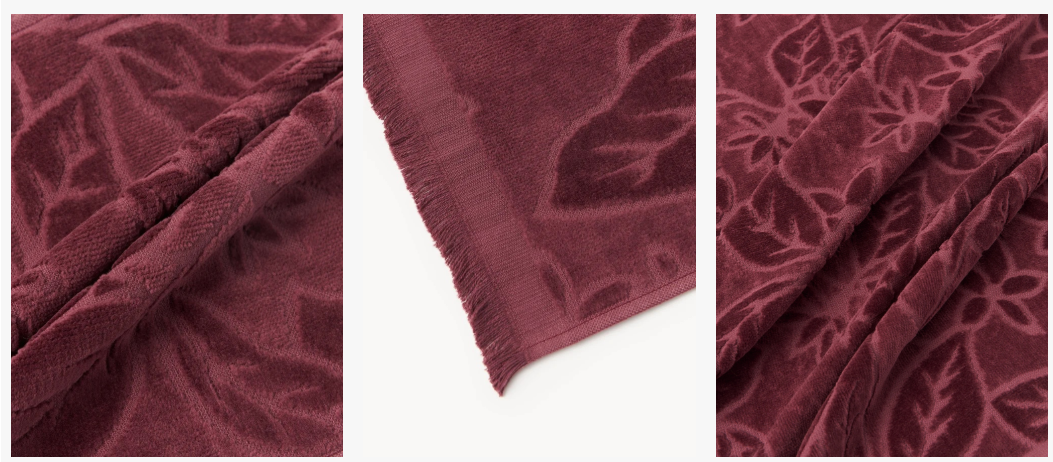
2. Key Advantages of Jacquard Craft
First, dimensional patterns and premium texture. By varying the density and construction of warp and weft yarns, jacquard creates patterns with rich light-and-shadow layers and distinct tactile relief, lending the product an unmistakable sense of quality and artistry.
Second, exceptional durability and fade resistance. Because jacquard patterns are woven into the fabric rather than printed onto it, they remain crisp and intact even after repeated washing, rubbing, and sun exposure—without the cracking, fading, or peeling common to printed designs. This results in a longer product lifespan.
Third, health-conscious and skin-friendly. Jacquard relies primarily on the yarns themselves to form the pattern, greatly reducing or even eliminating the use of dyestuffs and chemicals. This lowers chemical residues and makes jacquard products gentler on the skin, particularly suitable for infants, sensitive-skin users, and hotels or high-end clients with strict environmental requirements.
Fourth, superior absorbency and breathability. The well-balanced jacquard structure allows for beautiful patterns while preserving the excellent water absorption, breathability, and plush softness of pure cotton—genuinely combining beauty with function.
Fifth, higher value and stronger pricing power. Jacquard involves complex processes, multiple production steps, and a high technical barrier, naturally conveying a sense of premium quality. As a trusted towel supplier, offering jacquard collections allows you to command greater market pricing and brand premium, moving beyond price-based competition.
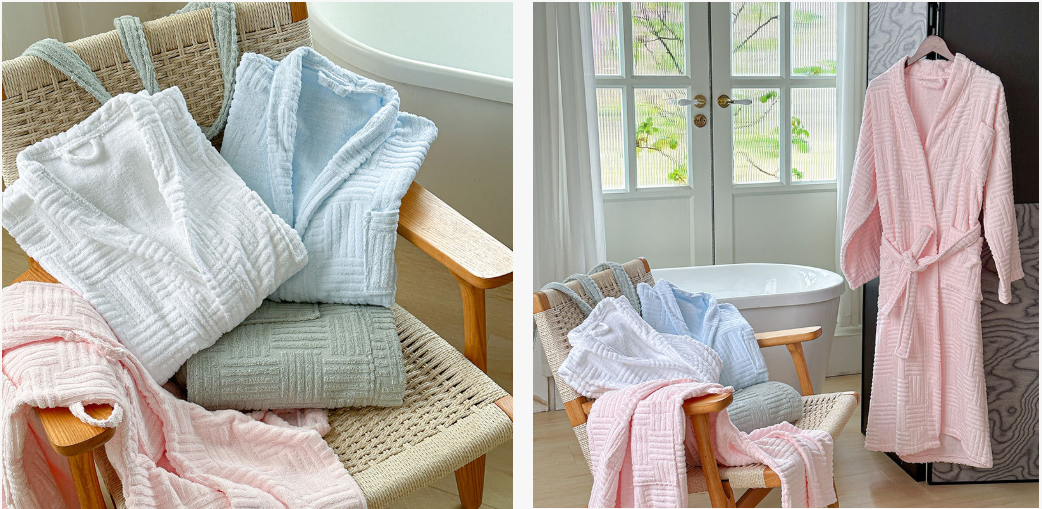
3. Which Logos Suit the Jacquard Technique?
It is important to note that jacquard patterns are formed through yarn interlacing, so their effect differs from printing and embroidery. In general, jacquard is best suited to the following types of logos: clean-lined brand lettering with clear outlines (such as acronyms and brand names); simple graphic symbols, geometric motifs, or line-based floral and animal designs; and single- or two-tone patterns with well-balanced spacing.
By contrast, jacquard is less suitable for logos that are overly intricate and fine, gradient-faded, or filled with large areas of solid color, as such patterns tend to blur or lose definition during weaving. Accordingly, a professional jacquard towel manufacturer will typically “jacquard-optimize” a logo before production to ensure the motif comes out crisp, dimensional, and full of texture. For towels and bath towels, weaving a brand logo into a corner or center panel not only enhances brand recognition and product prestige but also preserves everyday comfort—now the prevailing practice in premium customized towels.
4. Widespread Applications in the Towel and Bathrobe Sector
Today, jacquard technology runs through every link of the towel and bathrobe industry chain. In the hospitality and premium catering sectors, star-rated hotels and boutique resorts widely adopt jacquard towels, weaving their logos into a corner to project brand image and service quality. In brand customization and gifting, corporate custom orders, business gifts, and promotional giveaways make extensive use of jacquard logos as refined vehicles of brand value. In the home-consumption market, jacquard bathrobes and bath towels have become best-selling categories among affluent households and premium department stores, offering both practicality and decorative appeal. In export trade, markets in Europe, the United States, Japan, and South Korea show strong demand for jacquard towels. For a China towel factory and towel supplier serving overseas buyers, jacquard products have become a genuinely high-value-added category in export orders—generating substantial profit and reinforcing the reputation of a leading jacquard towel manufacturer in international trade.
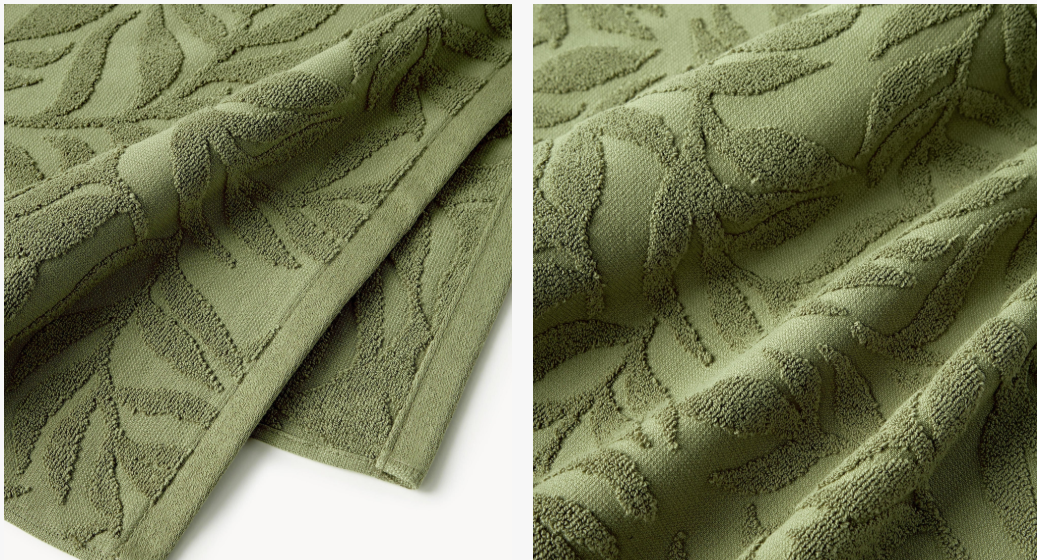
Conclusion
As consumer expectations keep rising, jacquard weaving will remain a key tool for textile brands that want to deliver durable, customizable and upscale cotton towels and bathrobes. It bridges the gap between function and branding, turning everyday textile goods into memorable brand touchpoints. When produced with quality raw cotton and precise loom control, jacquard items retain their softness, absorbency and visual appeal for years. For importers and brand owners looking for reliable custom textile partners, selecting a manufacturer experienced in jacquard sampling and bulk production reduces the risk of failed runs and inconsistent quality.
Huaian Goodlife Textile is an experienced towel factory and bathrobe factory. We welcome you to customize your own jacquard towel or jacquard design robe.
Post time: Nov-05-2026