
Against the backdrop of rapid global economic development, the traditional textile industry faces unprecedented challenges and opportunities. With continuous technological advancements, especially the widespread adoption of 5G technology and the application of smart devices, the traditional textile industry is gradually transforming and moving towards a new stage of intelligent manufacturing. This article will explore how the integration of 5G with smart textile workshops, and the high-speed operation of smart equipment on automated textile production lines, can pave a new path to intelligent manufacturing for the traditional textile industry.
I. The Rise of 5G Technology
The emergence of 5G technology marks another major leap forward in information and communication technology. Compared to 4G, 5G boasts higher transmission speeds, lower latency, and greater connection capacity. These characteristics make 5G a promising technology for various industries, especially in manufacturing, where it enables real-time communication between devices, improving production efficiency and product quality.
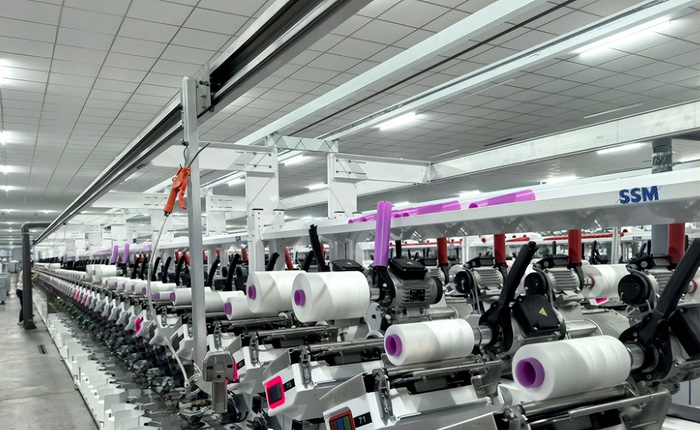
In the textile industry, the application of 5G technology enables intelligent interconnection of equipment, promoting the automation and intelligence of production lines. Through 5G networks, textile equipment can transmit data in real time, monitoring every step of the production process, thereby achieving refined management of the production line.
II. Construction of Intelligent Textile Workshops
Smart textile workshops are an important component of the transformation and upgrading of the traditional textile industry. By introducing intelligent equipment and 5G technology, textile companies can achieve full digitalization and intelligentization of their production processes. In smart textile workshops, equipment is interconnected through 5G networks, forming a highly efficient and flexible production system.
The core of a smart textile workshop lies in the application of intelligent equipment. This equipment can collect and analyze data in real time while operating at high speeds, helping companies promptly identify production problems and make adjustments and optimizations. For example, intelligent looms can automatically adjust production parameters based on changes in market demand, improving production efficiency and product quality.
III. Intelligentization of Automated Textile Production Lines
Automated textile production lines are a crucial foundation for realizing intelligent manufacturing. By introducing intelligent equipment, traditional textile production lines can achieve a high degree of automation, reducing manual intervention and improving production efficiency. The application of 5G technology is particularly critical in this process.
On automated textile production lines, intelligent equipment operates at high speeds, monitoring various indicators in real time. Through 5G networks, data can be rapidly transmitted between devices, enabling information sharing and collaboration. For example, when one piece of equipment malfunctions, the system can immediately notify other equipment to make adjustments, preventing production line downtime.
Furthermore, intelligent devices can use big data analytics to predict potential problems in production, allowing for proactive measures to mitigate production risks. This intelligent production method not only improves production efficiency but also reduces production costs, bringing considerable economic benefits to enterprises.
IV. Transformation and Upgrading of the Traditional Textile Industry
Faced with intensifying market competition and changing consumer demands, the traditional textile industry must transform and upgrade. Intelligent manufacturing is a crucial pathway to achieving this goal. By introducing 5G technology and smart equipment, traditional textile companies can improve production efficiency, reduce production costs, and enhance their market competitiveness.
During the transformation process, enterprises need to prioritize technology acquisition and talent development. Only by possessing advanced technology and professional personnel can they remain competitive in the fierce market. Furthermore, enterprises need to strengthen cooperation with research institutions and universities to promote technological innovation and application
V. Case Study: Successful Practices in Intelligent Textile Workshops
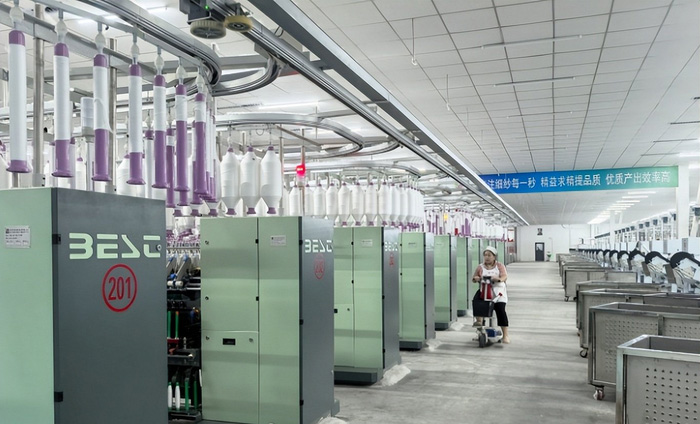
Both domestically and internationally, many textile companies have successfully transformed into intelligent manufacturing enterprises. For example, a well-known textile company established an intelligent textile workshop by introducing 5G technology and smart equipment. In this workshop, all equipment is interconnected through a 5G network, enabling real-time data transmission and analysis during the production process, which significantly improves production efficiency.
The company’s intelligent looms can automatically adjust production parameters according to changes in market demand, reducing manual intervention and improving production efficiency. Simultaneously, through big data analysis, the company can promptly identify and address production problems, ensuring stable product quality.
These successful cases demonstrate that intelligent manufacturing is not only an inevitable choice for the transformation and upgrading of the traditional textile industry, but also an important means to enhance corporate competitiveness.
Benefits of the “5G + Smart Spinning” Seminar
The launch of the “5G + Smart Spinning” seminar has brought many benefits to textile manufacturers, including:
Efficiency Improvements: By automating processes and using smart devices, manufacturers can significantly reduce production time and increase output. This efficiency improvement translates into higher profitability and a competitive advantage in the market.
Enhanced Quality Control: Real-time data monitoring enables immediate detection of quality issues, allowing manufacturers to address them before they escalate. This proactive approach to quality control ensures products meet the highest standards.
Cost Savings: Optimized production processes reduce material waste and lower operating costs. Furthermore, the ability to quickly adapt to changing production demands minimizes the risks of overproduction and inventory buildup.
Enhanced Flexibility: The smart equipment in the workshop can be easily reconfigured to adapt to different production batches, enabling manufacturers to respond quickly to market trends and customer needs.
A Future-Oriented Workforce: Through investment in training and development, the “5G+Smart Spinning” workshop aims to prepare the textile manufacturing industry for the future. Participants will gain valuable skills in operating advanced technologies, ensuring they can navigate the industry’s ever-changing landscape.
VI. Future Outlook
With the continuous development of 5G technology and the widespread adoption of smart devices, the path to intelligent manufacturing in the traditional textile industry will become even broader. In the future, companies will place greater emphasis on technological innovation and application, improving production efficiency and product quality through intelligent production methods.
Meanwhile, as consumers’ demand for personalized and high-quality products continues to increase, the traditional textile industry also needs to constantly adjust its production strategies to meet market changes. Smart manufacturing will provide enterprises with greater flexibility and adaptability, enabling them to respond quickly to market demands.
In conclusion, the integration of 5G and smart textile workshops has provided new impetus for the transformation and upgrading of the traditional textile industry. Through the application of intelligent equipment and the automation of production lines, the traditional textile industry is moving towards a new era of intelligent manufacturing. In the future, with continuous technological advancements, intelligent manufacturing will become the mainstream trend in the textile industry, injecting new vitality into its sustainable development.
Post time: Dec-15-2025